

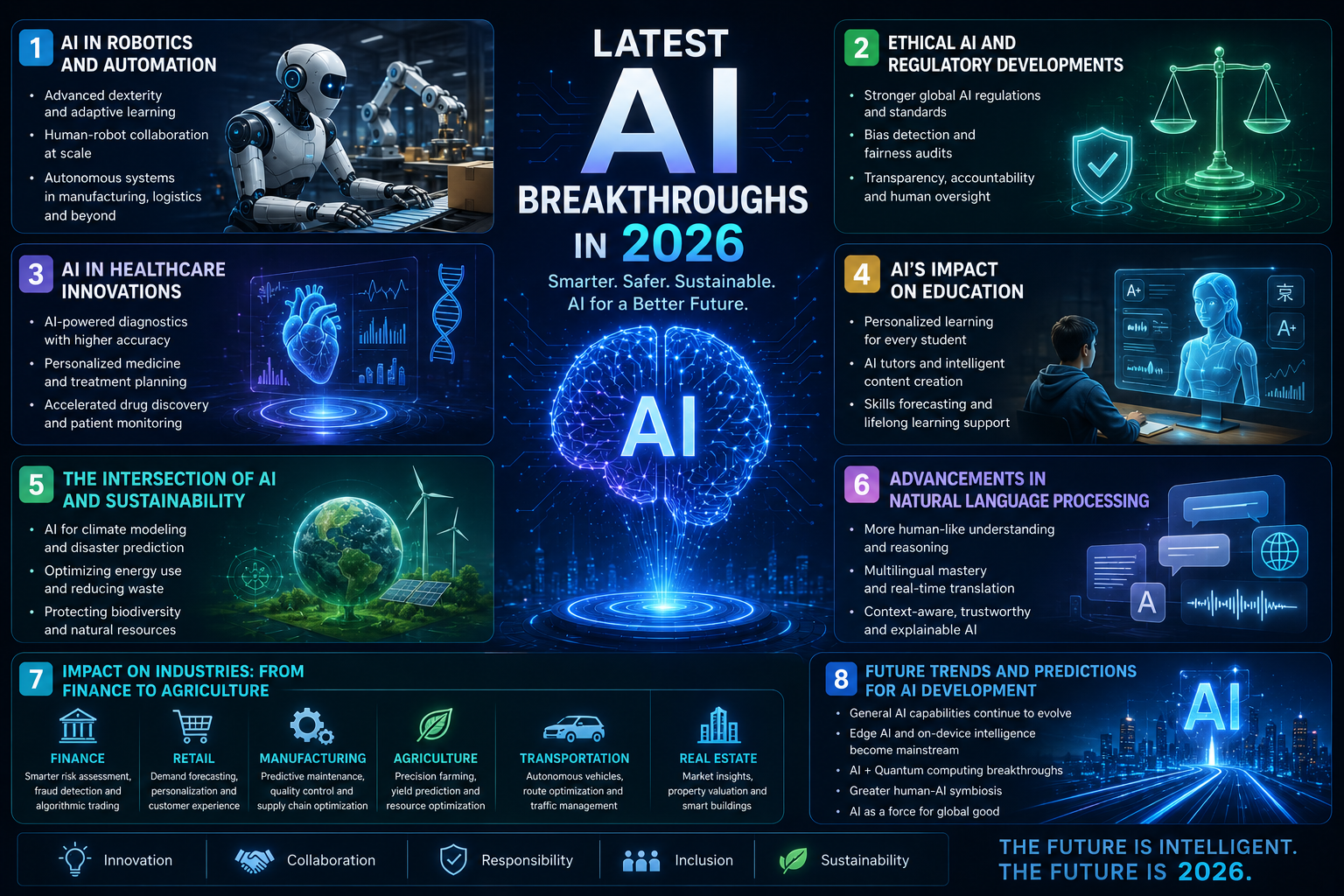
Table of Contents
Introduction to AI in 2026
The landscape of artificial intelligence (AI) has evolved significantly as we move into 2026, marked by groundbreaking advancements that have transformed industries and redefined technological capabilities. Over the past few years, AI technologies have not only become more sophisticated but have also permeated various sectors, including healthcare, finance, manufacturing, and entertainment. The rapid pace of innovation and adoption can be attributed to several factors, including increased computational power, enhanced algorithms, and the proliferation of data-driven decision-making.
In the preceding years leading up to 2026, AI made notable strides with developments such as deep learning, natural language processing, and computer vision. Some pivotal milestones included the widespread use of AI in automating routine tasks, enabling intelligent virtual assistants, and facilitating personalized experiences. These advancements laid the groundwork for the breakthroughs we now observe in real-time processing and contextual understanding, which have significant implications for how businesses operate and deliver value.
As of 2026, we are witnessing AI systems that can not only process information at unprecedented speeds but also provide actionable insights that drive innovation and efficiency. Industries are harnessing AI for predictive analytics, enhancing customer engagement, and optimizing supply chains. Moreover, the ethical considerations surrounding AI usage are gaining attention, with stakeholders emphasizing transparency and accountability in automated systems. The integration of AI has also encouraged a collaborative approach, where humans and machines work together more effectively to solve complex problems.
The significance of these advancements is substantial, as they reshape the dynamics of the workforce and create new opportunities for growth. As we delve deeper into the latest breakthroughs in AI throughout this blog post, it becomes evident that the future of artificial intelligence holds immense promise, empowering businesses to thrive in an increasingly competitive landscape.
AI in Robotics and Automation
The integration of artificial intelligence in robotics and automation has led to significant advancements in various sectors. In 2026, these breakthroughs are primarily characterized by improvements in robotic design, enhanced sensory perception, and more sophisticated autonomous decision-making capabilities. Organizations across industries, from manufacturing to healthcare, are witnessing productivity gains and operational efficiency through these technological innovations.
Modern robotics now leverages AI algorithms that enable machines to perceive their environments with remarkable accuracy. Advanced sensory systems, incorporating computer vision and tactile feedback, allow robots to interact with their surroundings in ways previously deemed impossible. For instance, AI-enhanced robots in manufacturing can seamlessly identify flaws in products, sort items, and perform complex assembly tasks with minimal human intervention. As a result, companies are not only reducing labor costs but also improving quality control.
The move towards automation is exemplified by the logistics industry, where AI-driven robotics are optimizing warehouse operations. Automated guided vehicles (AGVs) equipped with AI technology can navigate through warehouses, manage inventory, and make real-time decisions regarding the most efficient paths to take. Notably, a logistics company reported a 30% increase in warehouse throughput following the adoption of AI-enabled AGVs.
Healthcare is another area significantly transformed by AI in robotics. Surgical robots, enhanced by machine learning and AI, provide surgeons with unparalleled precision during operations, minimizing recovery time for patients and reducing the risk of complications. In a recent study, hospitals that integrated AI-assisted robotic systems saw surgical error rates drop by over 20%.
In summary, the advancements in AI-driven robotics and automation are reshaping industries, enabling organizations to optimize processes, enhance productivity, and ultimately provide better services and products to their customers. As technology continues to evolve, the future appears promising for sectors looking to harness the potential of AI in their operations.
Ethical AI and Regulatory Developments
As artificial intelligence continues to evolve and integrate into various sectors, the ethical considerations surrounding its deployment have gained unprecedented attention. In 2026, several regulatory frameworks and guidelines emerged to address the potential societal implications of advanced AI technologies. These frameworks aim to ensure that AI development prioritizes ethical practices while safeguarding public interests.
One significant development in this area is the introduction of comprehensive AI governance policies, which facilitate responsible AI use. Key provisions include transparency in AI algorithms, accountability for decision-making processes, and the establishment of ethical oversight committees. These bodies are tasked with evaluating AI applications to ensure compliance with set standards. Furthermore, market-driven incentives are designed to foster ethical behavior among AI developers, encouraging the adoption of best practices.
Another critical aspect of these regulations is the emphasis on inclusivity and fairness in AI systems. Policymakers recognize that biases embedded in algorithms can lead to discriminatory outcomes, adversely affecting marginalized groups. To combat this, guidelines have been put in place that mandate continuous monitoring of AI systems, along with mechanisms for redress in cases of harm caused by biased decisions. Various stakeholders, including technology companies, academic institutions, and civil society, have been called upon to actively participate in discussions shaping these frameworks, underscoring the democratisation of AI governance.
In conclusion, the ethical considerations of AI advancements must be prioritized as technological capabilities expand. The regulatory developments witnessed in 2026 reflect an ongoing commitment toward establishing a framework that balances innovation with societal wellbeing. As we navigate this complex landscape, the collaboration between regulators, developers, and the community will play a pivotal role in ensuring that AI serves humanity positively and equitably.
AI’s Impact on Education
Artificial Intelligence (AI) has been making significant strides in the education sector, fundamentally reshaping the way educators teach and students learn. One of the most prominent developments is the emergence of personalized learning experiences. With the help of AI, educational platforms are able to analyze individual student performance data, identifying their strengths and weaknesses. This data-driven approach allows for the crafting of tailored learning paths that cater to the specific needs of each student, enhancing their educational journey dramatically.
Intelligent tutoring systems (ITS) represent another major breakthrough in AI’s role in education. These systems utilize advanced algorithms to provide real-time feedback and guidance to students. By simulating one-on-one interactions with a human tutor, AI can assist learners in understanding complex topics more effectively. As a result, students who may struggle in traditional classroom settings are offered the support they need, which subsequently promotes higher engagement and retention of information.
Moreover, AI-powered assessment tools play a crucial role in transforming how student performance is evaluated. These tools can automatically grade assignments and exams, provide insights into learning patterns, and identify areas that may require additional focus. Such technology not only streamlines the assessment process for educators but also allows for a more comprehensive understanding of student learning outcomes. This kind of approach ensures that assessments are fair, consistent, and aligned with the individual learning trajectories of students.
Overall, the integration of AI in education is proving to improve accessibility and create sophisticated learning strategies for diverse student populations. By leveraging these innovations, educational institutions can foster an inclusive environment where all learners can thrive, ultimately contributing to enhanced educational achievement in a rapidly evolving world.
The Intersection of AI and Sustainability
The recent breakthroughs in artificial intelligence (AI) have shown great promise in promoting sustainability across various sectors. With the urgency of climate change and the necessity for resource management, AI applications are emerging as pivotal tools to address these pressing challenges. In environmental monitoring, AI systems are increasingly being deployed to analyze vast amounts of data collected from sensors and satellites. These technologies facilitate real-time tracking of pollution levels, deforestation, and habitat loss, effectively enhancing conservation efforts. By utilizing machine learning algorithms, AI can identify patterns and predict future environmental changes, allowing for timely interventions designed to mitigate ecological damage.
In the realm of energy management, AI is instrumental in optimizing resource consumption. Smart grids powered by AI can analyze energy usage data to predict demand, distribute resources more efficiently, and integrate renewable energy sources. This advancement not only reduces carbon footprints but also promotes the use of cleaner energy alternatives. Furthermore, AI-driven analytical tools are being developed to facilitate energy efficiency assessments, guiding businesses and households in implementing sustainable practices.
Sustainable agriculture is another sector where AI breakthroughs are making significant inroads. Technologies such as precision farming use AI to analyze soil health, crop conditions, and weather patterns, thereby maximizing yield while minimizing waste. For instance, AI-enabled drones equipped with imaging technology support farmers in monitoring crop health comprehensively, enabling targeted interventions that conserve resources and enhance productivity. These smart farming techniques not only contribute to food security but also promote sustainable land and water management practices.
Thus, the intersection of AI and sustainability presents a promising outlook and serves as a catalyst for innovative solutions aimed at combating the environmental challenges faced globally. As these technologies continue to evolve, their potential to enhance sustainable practices across various sectors will undoubtedly inspire a shift towards a more sustainable future.
Key Milestones Achieved
This year’s highlights include the launch of AI systems that can decode human emotions in real-time, enabling tech to understand not just the words we say, but the feelings behind them. We also saw the first successful implementation of AI ethics protocols in major corporations, proving that machines can play nice after all. Additionally, AI-driven healthcare solutions have become more sophisticated, effectively diagnosing diseases at superhuman speed.
Comparative Analysis with Previous Years
When you compare 2026 with the previous years, it’s clear that we’ve hit the turbo button on AI development. While 2023 was remarkable for its focus on foundational AI models, 2026 has taken a more tailored approach, seeing increased specialization in AI applications. What used to be a generic chatbot now converses like your favorite barista, complete with personalized recommendations. It’s like going from dial-up to fiber-optic internet—once frustratingly slow, now lightning fast and infinitely smarter!
Advancements in Natural Language Processing
Natural language processing (NLP) in 2026 could hold a PhD in empathy. We’ve made huge leaps forward that make our interactions with machines feel less like chatting with a toaster and more like conversing with a coffee buddy.
Improved Context Understanding
Gone are the days when AI would respond to “Can you help me?” with “Sure, I can juggle!” Now, these systems can grasp context like a seasoned therapist. They understand nuances and idioms, leading to conversations that flow with a remarkable level of coherence. It’s almost as if your digital assistant is taking classes in the art of human interaction.
Real-time Language Translation
Imagine a world where you can chat freely with someone who speaks a different language—like magic, but without the wands. Real-time translation technology has taken off, making cross-cultural conversations a breeze. AI can now translate not just the words, but the tone and emotion behind them, reducing the chances of awkward miscommunications. Adieu to “lost in translation” moments!
Conversational AI Enhancements
Conversational agents have leveled up their game, engaging in discussions that rival your college roommate’s late-night philosophical debates. With the ability to maintain context across long conversations and engage in multi-turn dialogues, these AI systems are no longer just answering questions—they’re providing thoughtful responses, making them a trusty sidekick for both casual chats and serious inquiries.
Innovations in Computer Vision
Computer vision has seen a renaissance in 2026, with innovations that are sharper than your uncle’s photography skills at family gatherings. The technology is not just recognizing faces; it’s basically developing a sixth sense.
New Techniques in Image Recognition
AI image recognition has taken a quantum leap forward, boasting algorithms that can identify objects and contexts within images with near-human accuracy. From distinguishing a labrador from a golden retriever (yes, they do have different vibes) to understanding complex scenes, this tech is revolutionizing industries from advertising to agriculture.
Applications in Autonomous Vehicles
Self-driving cars are no longer confined to just being plot points in action movies—they’re here, and they’re ready to hit the roads! With enhanced computer vision capabilities, these vehicles can navigate city streets and high-speed highways with a level of precision that would make even the most skilled driver sweat. The future of road trips is looking exceptionally liberated from the wheel.
AI in Surveillance and Security
In the realm of security, AI-powered surveillance systems are becoming the new watchdogs, using advanced facial recognition and behavioral analysis to detect anomalies and potential threats in real time. Think of it as having a digital bouncer that never gets tired—and doesn’t need to eat pizza at 3 AM. This tech is transforming how we ensure safety in public spaces and private properties alike.
Enhancements in Machine Learning Algorithms
Machine learning in 2026 is like a buffet of innovation—there’s something new and delicious to dig into every day. With algorithms growing smarter, we’re inching closer to AI systems that not only learn but understand in ways we’ve never thought possible.
Breakthroughs in Reinforcement Learning
Reinforcement learning has stepped into the spotlight, demonstrating an impressive ability to learn from its successes and failures. This year, AI has mastered complex tasks like playing video games or managing smart home systems, adapting its strategies with a finesse that would make a poker champion jealous. The more it plays, the better it gets—talk about a winning streak!
Transfer Learning Developments
Transfer learning has emerged as a game-changer in 2026, allowing AI models to apply knowledge gained in one area to solve problems in another. It’s like teaching your dog to fetch and then realizing he can also help with that pesky weekly grocery run. This advancement not only reduces the need for extensive dataset training but also turbocharges the efficiency of AI systems across various applications.
Explainable AI: The New Frontier
In a world where understanding the “why” behind decisions is crucial, explainable AI is taking center stage. This year, advancements have made it possible for AI systems to provide clear, understandable reasoning for their decisions, helping users trust and adopt these technologies more readily. It’s like getting a front-row seat to the AI’s thought process—minus the popcorn!
Major Breakthroughs in AI Algorithms
In 2026, the realm of artificial intelligence (AI) witnessed considerable advancements, particularly in the development and refinement of algorithms. These breakthroughs have significantly enhanced various domains, including machine learning, deep learning, reinforcement learning, and natural language processing. One of the most prominent algorithmic developments has been the evolution of transformer models, which have revolutionized natural language processing tasks. These models enable AI systems to outperform previous ones in tasks such as language translation, sentiment analysis, and content generation by better understanding context and nuance.
Another notable advancement has occurred in reinforcement learning (RL). Innovations in algorithms have led to more efficient training processes, allowing AI systems to learn from their environment and adapt their strategies in real-time. As a result, RL applications are now more prevalent in areas such as robotics and autonomous systems, where agents are trained to make decisions that maximize rewards. This has led to breakthroughs in self-driving cars, where AI can navigate complex environments intelligently and safely.
Additionally, the application of federated learning algorithms has gained traction, emphasizing data privacy and decentralized model training. This method allows AI to learn from multiple datasets distributed across different devices without compromising user privacy. For instance, in healthcare, federated learning enables the development of robust predictive models using sensitive patient data without the need for central data storage, thereby addressing privacy concerns.
Ultimately, these algorithmic advancements highlight the transformative potential of AI across various sectors. By integrating the latest techniques from deep learning, reinforcement learning, and natural language processing, researchers and developers continue to push the boundaries of what is possible in AI, driving innovation and practical applications across numerous fields.
AI in Healthcare: Transformative Applications
Diagnostic Tools and Predictive Analytics
In 2026, AI has revolutionized diagnostics, making it faster and more accurate than ever. Imagine walking into a doctor’s office and having an AI-powered tool analyze your symptoms in seconds, cross-referencing millions of cases. The result? Early detection of diseases like cancer or diabetes that might have stumped even the most seasoned doctors. Predictive analytics has taken center stage, allowing healthcare professionals to anticipate health trends and prevent diseases before they even arise—because who wouldn’t want a crystal ball for their health?
AI-driven Personalized Medicine
Gone are the days of one-size-fits-all treatments. In 2026, AI has perfected the art of personalized medicine, tailoring drug regimens and treatment plans to individuals’ unique genetic makeups. By analyzing vast datasets, AI not only identifies the most effective treatments but also predicts potential side effects based on your DNA. It’s like having a bespoke suit, but for your health. You’ll never feel more special than when your doctor says, “This treatment is just for you!”
Operational Efficiency in Healthcare Systems
Thanks to AI, healthcare systems in 2026 are operating with the efficiency of a well-tuned Swiss watch. Administrative tasks that once consumed hours are now automated, allowing healthcare professionals to focus on what they do best: caring for patients. From streamlining appointment scheduling to managing patient records, AI is clearing the clutter and propelling healthcare into a new era—one where patients actually spend more time with their doctors and less time filling out forms.
AI in Healthcare Innovations
In 2026, artificial intelligence (AI) has significantly transformed the healthcare landscape, introducing innovative applications that revolutionize patient care and medical outcomes. One of the most impactful areas is predictive analytics, which utilizes AI algorithms to analyze patient data and predict potential health issues before they arise. By leveraging vast datasets, healthcare providers can identify patterns and risk factors, enabling timely interventions that prevent complications and conditions from worsening.
Additionally, personalized medicine has seen a remarkable advancement, as AI facilitates the development of customized treatment plans tailored to individual patient profiles. Using genetic information and lifestyle factors, AI systems can recommend specific therapies that optimize effectiveness and minimize side effects. This personalized approach not only improves treatment outcomes but also enhances patient engagement by involving them in their health decisions.
AI-driven diagnostics have also made a profound impact on the accuracy and efficiency of medical assessments. Machine learning algorithms analyze medical images, lab results, and patient histories to assist healthcare professionals in diagnosing diseases more accurately. For instance, AI technologies are employed in radiology to detect anomalies in imaging scans that may be missed by the human eye. Hospitals that have integrated AI diagnostic tools report higher accuracy rates and faster turnaround times in clinical workflows.
Case studies from leading hospitals demonstrate the real-world advantages of AI in healthcare. For instance, a prominent healthcare facility implemented an AI system for early detection of sepsis, resulting in a 20% reduction in mortality rates. Another case highlighted the success of an AI-assisted robotic surgery system that offered enhanced precision and decreased recovery times for patients. These examples underscore the transformative potential of AI in the pursuit of improved patient outcomes and operational efficiency.
Ethical Considerations and Challenges
Bias and Fairness in AI Systems
As we celebrate AI breakthroughs, we must also tread carefully over the ethical minefield that is bias and fairness in AI systems. In 2026, the industry faces the challenge of ensuring that algorithms don’t discriminate based on race, gender, or socioeconomic status. The good news? Developers are increasingly aware of these pitfalls and are pushing for more diverse training data and transparency. After all, the goal is to create an AI that serves *everyone*, not just a select few.
Data Privacy Concerns
With great power comes great responsibility, especially when it comes to data privacy. In 2026, as AI systems collect and analyze mountains of personal data, the stakes are higher than ever. Users are more concerned than ever about who has access to their medical records, financial details, and personal preferences. Companies are racing to strike a balance between personalization and privacy, aiming for a future where your data is both a valuable asset and well-guarded treasure. Spoiler: encryption is the new black!
Regulatory Developments and Compliance
As AI’s influence expands, so does the regulatory landscape. In 2026, governments are stepping up efforts to establish clear guidelines for AI deployment across various sectors. Compliance measures are increasingly necessary for companies looking to leverage AI without stepping on legal landmines. The message is clear: play by the rules, or risk being benched! Expect to see more conversations around accountability, liability, and ethical standards as we navigate this brave new world.
Impact on Industries: From Finance to Agriculture
AI in Financial Services
In finance, 2026 has seen AI become the ultimate financial advisor—minus the high fees and awkward small talk. From fraud detection that identifies suspicious transactions in real-time to AI algorithms that predict stock market trends (just don’t blame it if you lose money), the financial sector is undergoing a digital transformation. Robo-advisors are personalizing investment strategies, making wealth management accessible to the masses. Your next financial guru might just be a line of code!
Revolutionizing Supply Chain Management
AI is also changing the game in supply chain management, where ensuring products are delivered on time is no longer a Herculean task. In 2026, smart algorithms analyze consumer demand, optimize logistics, and even predict potential disruptions caused by everything from natural disasters to shipping delays. It’s like having a crystal ball, but with more spreadsheets and fewer fortune tellers. As a result, companies are reducing costs and improving customer satisfaction. Talk about a win-win!
AI Applications in Agriculture
Farming in 2026 isn’t what it used to be—it’s smarter, greener, and yes, way cooler! AI has become the farmer’s new best friend, optimizing crop yields and reducing waste. Precision agriculture techniques utilize AI to analyze soil health, monitor crop conditions, and even predict weather patterns. Imagine drones buzzing overhead, mapping fields and delivering seeds with pinpoint accuracy. Farmers are embracing innovation, and the result? A more sustainable food system that feeds the ever-growing population. Who knew agriculture could be this high-tech?
Future Trends and Predictions for AI Development
Emerging Technologies to Watch
As we glance into the crystal ball for 2030, several emerging technologies have started buzzing in the AI arena. From quantum computing, which could exponentially increase processing power, to neuromorphic computing that mimics human brain function, the future is rife with possibilities. Expect breakthroughs that will redefine AI capabilities, making today’s innovations look like child’s play. Next stop: AI with a personality? Fingers crossed!
Long-term Societal Implications
By 2030, the societal impact of AI will be profound. While we’ve embraced AI for convenience and efficiency, we must also consider its implications on jobs, education, and interpersonal relationships. Will robots take over our jobs, or will they create new opportunities? Can we maintain our humanity in a world filled with machines? As we navigate these questions, the goal will be to harness AI ethically, ensuring it complements our lives rather than complicates them.
A Glimpse into AI in 2030 and Beyond
Looking ahead to 2030 and beyond, AI promises to be an integral part of our daily lives, much like the smartphone was in the last decade. Imagine smart cities where AI manages everything from traffic flow to energy consumption, creating an urban utopia. Picture virtual assistants that anticipate your needs before you even say a word. While the future may feel like something out of a sci-fi movie, it’s not too far-fetched. Buckle up, because the adventure into AI’s next chapter is just getting started!In conclusion, the breakthroughs in artificial intelligence in 2026 represent a significant leap forward, showcasing the immense potential of this technology to transform industries and improve lives.
As we continue to harness the power of AI, it is crucial to remain mindful of the ethical implications and challenges that accompany these advancements. By fostering responsible development and implementation, we can ensure that the future of AI is not only innovative but also beneficial for society as a whole. The journey of AI is just beginning, and the possibilities ahead are both exciting and limitless.
Conclusion: The Road Ahead
The advancements in artificial intelligence witnessed in 2026 mark a significant turning point for numerous industries and areas of society. From healthcare to transportation, the implications of these breakthroughs are profound and transformative. Throughout this blog post, we have highlighted notable innovations such as enhanced machine learning algorithms, advanced natural language processing, and pioneering robotics, all of which showcase the accelerating capabilities of AI technologies.
One critical takeaway from the developments discussed is the need for responsible development and deployment of AI systems. As organizations increasingly rely on artificial intelligence to drive efficiencies and improve decision-making processes, ethical considerations must remain a priority. The need to mitigate biases, ensure data privacy, and enhance transparency should guide the implementation of cutting-edge technologies across sectors. Without a robust ethical framework, there is a risk of widening inequality and diminishing trust in AI applications.
Furthermore, collaboration between industry leaders, governments, and academic institutions is vital to fostering an environment conducive to sustainable AI growth. Interdisciplinary efforts can facilitate a balanced approach that harnesses the benefits of artificial intelligence while addressing associated challenges. As we look to the future, the integration of AI should not be just a pursuit of technological advancement but also a commitment to improving quality of life, driving economic growth, and enabling equitable access to these innovations.
In conclusion, the breakthroughs in AI represent both an opportunity and a responsibility. As we embark on this transformative journey, a conscious approach to integrating AI technologies will shape our collective future, determining how these advancements impact society at large. By prioritizing ethical considerations and collaboration, we can ensure that the road ahead leads to a positive legacy for artificial intelligence.
As we progress into 2026, the landscape of artificial intelligence continues to evolve at an unprecedented pace, marked by groundbreaking advancements that are reshaping various sectors and enhancing daily life. From revolutionary improvements in natural language processing to transformative applications in healthcare, AI is not just a technological trend but a powerful force driving innovation and change. This article explores the latest breakthroughs in AI, delving into the enhancements in machine learning algorithms, the implications of ethical considerations, and the far-reaching impacts across industries. Join us as we navigate through the remarkable developments that define the current state of artificial intelligence and envision its future trajectory.
Frequently Asked Questions
What are the most significant AI breakthroughs in 2026?
The most significant breakthroughs include advancements in natural language processing, improvements in computer vision, and enhanced machine learning algorithms that have transformed various industries such as healthcare and finance.
How is AI impacting the healthcare industry in 2026?
AI is revolutionizing healthcare through diagnostic tools, predictive analytics, and personalized medicine, leading to improved patient outcomes and operational efficiency within healthcare systems.
What ethical challenges are associated with recent AI advancements?
Key ethical challenges include addressing bias in AI systems, ensuring data privacy, and navigating regulatory compliance to promote fairness and accountability in AI applications.
What trends are expected in AI development in the coming years?
Future trends may include the emergence of explainable AI, increased integration of AI in everyday applications, and a focus on responsible AI practices to address societal implications.
